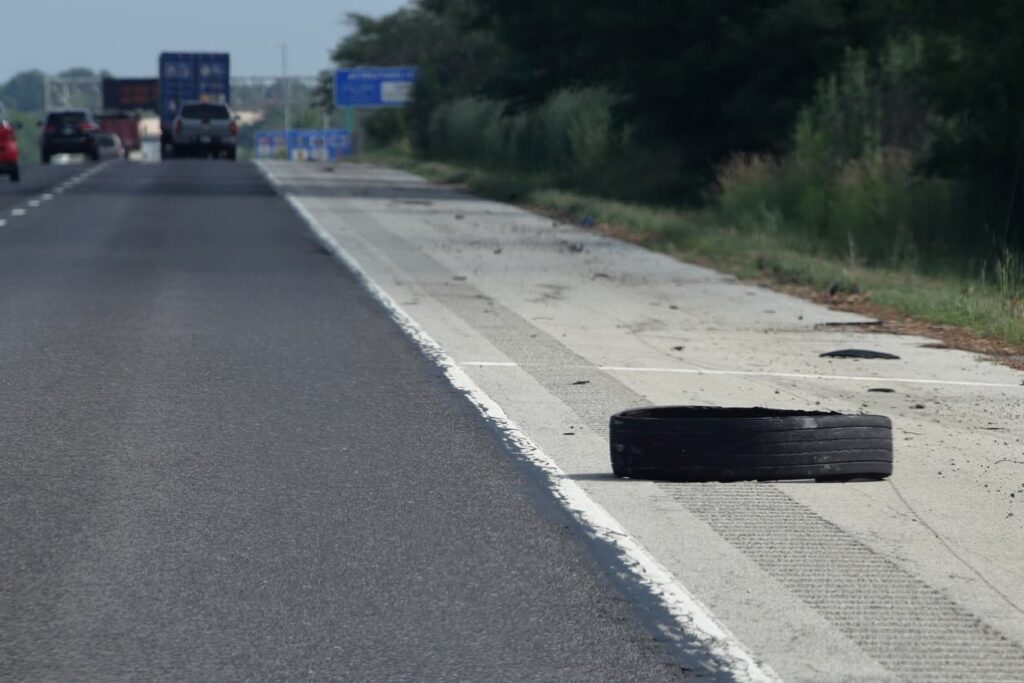
Road debris accidents in Missouri create complex liability questions that depend on the source of the debris, road conditions, and available evidence. Popham Injury Law helps Missouri drivers understand their rights after crashes caused by fallen cargo, blown tire treads, construction materials, or hazardous road conditions.
Road Debris Accidents in Missouri - What to Know
- Multiple parties may bear responsibility for Missouri road debris accidents, including trucking companies with unsecured loads, construction contractors, and government agencies like MoDOT
- Missouri's comparative fault system allows recovery even when you share some blame, though your compensation reduces by your percentage of fault
- Uninsured motorist coverage could apply to phantom vehicle crashes where debris comes from an unknown source
- Evidence collection immediately after the accident—photos, witness information, and debris preservation—can strengthen your claim significantly
- Missouri has a five-year statute of limitations for personal injury claims, but quick action is crucial for securing evidence or cases against government entities with shorter notice deadlines
Who Is Liable If Road Debris Causes a Crash in Missouri?
Liability for Missouri road debris accidents varies dramatically based on the debris source and the circumstances surrounding the crash. Several parties might bear responsibility for your injuries and vehicle damage.
Trucking Companies and Commercial Drivers
Commercial vehicles hauling cargo must secure their loads according to Missouri law. When unsecured cargo falls from trucks and causes accidents, both the trucking company and driver face potential liability. Missouri law requires drivers to prevent cargo from falling, shifting, or spilling onto roadways.
Trucking companies also bear responsibility for proper maintenance. Tire tread debris, commonly called "gators," result from worn tires or improper maintenance schedules. These companies must maintain detailed maintenance records that attorneys can review during investigations.
Evidence from the trucking company's safety records, driver training programs, and federal compliance history helps establish patterns of negligence that contributed to your accident.
Construction Companies and Road Contractors
Construction zones present unique hazards when contractors fail to secure materials or clean debris properly. Missouri holds construction companies responsible for maintaining safe work zones and removing materials that might endanger traffic.
State contracts with road construction companies typically include specific safety requirements and debris removal protocols. When contractors violate these standards, they face liability for resulting accidents.
Government Entities and MoDOT Claims
Missouri Department of Transportation (MoDOT) maintains responsibility for state highway safety, including debris removal and hazard mitigation. While sovereign immunity generally protects government entities, Missouri law creates exceptions for dangerous road conditions.
Filing claims against MoDOT requires specific procedures under the Missouri Tort Claims Act. These claims may involve potholes, fallen tree branches, or accumulated debris that create hazardous driving conditions.
Is It Illegal to Drive with an Unsecured Load in Missouri?
Missouri law strictly prohibits driving with unsecured loads that might fall onto roadways. Violation of these requirements creates presumptive negligence that strengthens accident claims.
Missouri Revised Statutes §307.010 mandates that vehicle loads must be secured to prevent spillage or falling debris. The law applies to both commercial truckers and private individuals transporting materials.
Common unsecured load violations include:
- Improperly tied cargo on pickup trucks
- Overloaded dump trucks without adequate covering
- Furniture or appliances secured with insufficient restraints
- Construction materials loaded beyond vehicle capacity
- Landscaping debris transported without proper containment
Violations carry fines and create civil liability when accidents result. Police reports documenting unsecured load citations provide valuable evidence for personal injury claims.
Can I File a Claim Against MoDOT for Debris or Pothole Damage?
Missouri law allows claims against MoDOT under specific circumstances involving dangerous road conditions. However, these cases require proving that MoDOT had actual or constructive notice of the hazard and failed to address it within reasonable timeframes.
MoDOT Claim Requirements
Claims against Missouri government entities must follow strict procedural requirements. The Missouri State Legal Expense Fund handles these claims through a formal process with three key elements.
First, notification requirements demand written notice within specific timeframes after discovering the dangerous condition. Most claims require notice within 90 days of the incident, though some circumstances allow longer periods.
Second, you must provide documentation proving MoDOT's knowledge of the hazardous condition through prior complaints, maintenance records, or obvious visibility of the problem.
Third, evidence must show the dangerous condition substantially contributed to your accident and injuries rather than driver error or other factors.
Types of Covered Road Hazards
MoDOT liability typically applies to conditions like deep potholes that damage vehicles or cause loss of control, accumulated debris that creates driving hazards, inadequate signage warning of road construction or hazards, and improperly maintained guardrails or road surfaces.
The following elements strengthen MoDOT claims:
- Multiple prior complaints about the same road hazard
- Maintenance records showing delayed or inadequate repairs
- Photographic evidence of obviously dangerous conditions
- Witness testimony about the hazard's visibility and duration
Success in MoDOT cases can depend on proving the agency's constructive notice through the hazard's obvious nature or duration.
What If the Debris Came from an Unknown Vehicle?
Phantom vehicle accidents, where debris falls from unidentified vehicles, present unique challenges for Missouri accident victims. These cases often rely on uninsured motorist coverage rather than traditional liability claims.
Phantom Vehicle Documentation
Missouri insurance law recognizes phantom vehicle claims when physical evidence supports the incident. Key documentation includes police reports describing the debris and circumstances, photographs of vehicle damage consistent with debris impact, witness statements confirming the phantom vehicle's involvement, and physical debris preservation when possible.
Insurance companies sometimes dispute phantom vehicle claims without adequate documentation. Strong evidence collection immediately after the accident proves crucial for claim acceptance.
Investigative Resources
Even when the debris source seems unknown, an investigation might identify responsible parties. Traffic cameras, nearby business security footage, and witness interviews can reveal the debris source vehicle.
In some cases, professional accident reconstruction may help establish how debris caused the crash and whether other vehicles bore responsibility. These investigations sometimes uncover trucking companies or contractors whose negligence contributed to the accident.
What Insurance Coverage Applies to Debris Accidents?
Missouri drivers typically carry multiple insurance coverages that might apply to debris accidents. Understanding these options helps determine potential source of compensation crucial for securing a fair recovery.
Uninsured Motorist Coverage for Phantom Vehicles
Missouri Revised Statute §379.203 mandates minimum UM coverage equal to liability limits unless drivers specifically reject this protection in writing.
However, policy language varies significantly between insurance companies regarding physical contact requirements. Some insurance policies require physical contact between your vehicle and the phantom vehicle for UM coverage, while others accept debris impact as sufficient contact for claim purposes.
Policy language review becomes critical in phantom vehicle cases where the debris source remains unknown.
Collision and Comprehensive Coverage
Collision coverage typically pays for vehicle damage regardless of fault, subject to your deductible amount. This coverage provides immediate repair funding while liability investigations proceed against responsible parties.
Comprehensive coverage might apply to certain debris accidents, particularly those involving weather-related debris or unavoidable road hazards. Policy language determines which coverage applies to specific circumstances.
Medical Payment Coverage
Medical payment (MedPay) coverage provides immediate medical expense coverage regardless of fault. This coverage helps pay emergency room bills, ambulance costs, and initial medical treatment while other claims develop.
Missouri doesn't require MedPay coverage, but many drivers carry this protection for prompt medical bill payment after accidents.
How Does Missouri's Comparative Fault Affect My Compensation?
Missouri follows a pure comparative fault system that allows recovery even when you bear partial responsibility for the accident. Your compensation is reduced by your percentage of fault, but you can still recover damages.
Insurance adjusters and juries consider various factors when assigning fault percentages in debris accidents. These include driver attention and reaction time when debris appeared, vehicle speed relative to road conditions and visibility, following distance behind vehicles that might drop debris, and compliance with traffic laws and safe driving practices.
Legal counsel becomes particularly important when insurance companies attempt to shift blame onto accident victims. Attorneys understand how to investigate thoroughly and effectively present evidence. Professional representation helps counter unfair fault assessments that might otherwise reduce your compensation.
What Evidence Helps Prove a Debris-Related Crash?
Strong evidence collection immediately after debris accidents significantly impacts claim outcomes. Multiple evidence types work together to establish liability and damages.
Physical Evidence Preservation
Preserving actual debris pieces provides crucial evidence about the accident cause and the responsible party. When safe, photograph debris locations and characteristics before removal. Collect pieces that might identify the source vehicle or cargo type.
Vehicle damage patterns may indicate debris impact angles and speeds. Professional photographers and accident reconstructionists can document this evidence for later analysis.
Digital Documentation
Modern accidents benefit from various digital evidence sources. Dashboard cameras capture real-time accident footage showing debris sources and impact circumstances. Cell phone videos and photographs document scene conditions, weather, and visibility factors.
Social media posts from witnesses or nearby drivers sometimes provide additional accident perspectives or identify responsible vehicles that left the scene.
Witness Information
Witness testimony proves invaluable in debris cases, particularly for phantom vehicle situations. Witnesses might identify debris sources, describe dangerous driving behavior, or confirm road hazard conditions.
The following witness information strengthens your case:
- Contact information for immediate and follow-up interviews
- Written statements describing what they observed
- Vehicle descriptions including license plates when visible
- Timeline details about events leading to the accident
- Photographs or videos witnesses captured at the scene
Professional investigators sometimes locate additional witnesses through canvassing nearby businesses or residential areas where people might have observed the incident.
What Should I Do Immediately After a Debris Accident?
Once you're home and have received initial medical care, several important steps help protect your rights and strengthen potential claims.
Document Your Experience
Write detailed notes about how the accident occurred while your memory remains clear. Include timeline information and any observations about other vehicles or road hazards that contributed to the incident.
Review and organize any photos or evidence you collected, including vehicle damage images, debris characteristics, and road conditions. If you didn't capture certain details initially, note what you remember for future reference.
Medical Follow-Up
Seek a comprehensive medical evaluation even when injuries seem minimal. Debris accidents could cause delayed-onset injuries that require professional assessment and documentation for potential claims.
Keep detailed records of all medical treatments, appointments, and expenses related to your accident injuries. This documentation becomes crucial for insurance claims and legal proceedings.
Insurance and Legal Steps
Contact your insurance company promptly to report the accident and begin the claims process. Provide factual information without admitting fault or speculating about causes that you cannot definitively prove.
Review your policy coverage limits and requirements, particularly for uninsured motorist claims, if the debris source remains unknown. Understanding your coverage options helps you make informed decisions about your recovery.
Consider consulting with an experienced attorney, especially when injuries are serious, fault is disputed, or multiple parties might bear responsibility. Legal guidance helps protect your interests while you focus on recovery.
Missouri Road Debris Crashes Frequently Asked Questions
How Long Do I Have to Report a Debris Accident to My Insurance Company?
Most insurance policies require prompt accident reporting. However, specific policy language governs these requirements, and some companies accept longer delays with reasonable explanations.
What Is the Statute of Limitations for Debris-Related Car Accidents in Missouri?
Missouri provides five years from the accident date to file personal injury lawsuits for debris accidents. However, exceptions may apply for delayed injury discovery or claims against government entities like MoDOT, which require shorter notice deadlines.
Can I Sue if Debris from a City Trash Truck Caused My Accident?
Government vehicles and employees may have qualified immunity, but exceptions exist for negligent operations or dangerous conditions. Claims against municipalities require specific notice procedures and shorter deadlines than private party lawsuits.
What if the Debris Bounced off Another Car before Hitting Mine?
Multiple vehicle involvement creates complex liability scenarios where each driver's insurance might contribute to damages. The original debris source typically bears primary responsibility, while other drivers might share comparative fault based on their actions.
How Much Compensation Can I Receive for a Debris Accident?
Compensation depends on medical expenses, lost wages, vehicle damage, and pain and suffering damages. Missouri's comparative fault system reduces awards by your percentage of responsibility, but doesn't cap total recovery amounts in most cases.
Contact Popham Injury Law for Help After Your Debris Accident
Road debris accidents in Missouri involve complex liability questions that benefit from experienced legal guidance. Popham Injury Law understands how to investigate debris sources, preserve crucial evidence, and pursue fair compensation through insurance claims and litigation.
We handle debris accident cases throughout Missouri, from phantom vehicle UM claims to complex trucking company investigations. Our trial-ready approach helps clients recover compensation while focusing on their physical recovery.
Contact Popham Injury Law today at (816) 221-2288 for a consultation about your Missouri road debris accident. We'll review your case, explain your options, and help you create a path forward for your specific situation.