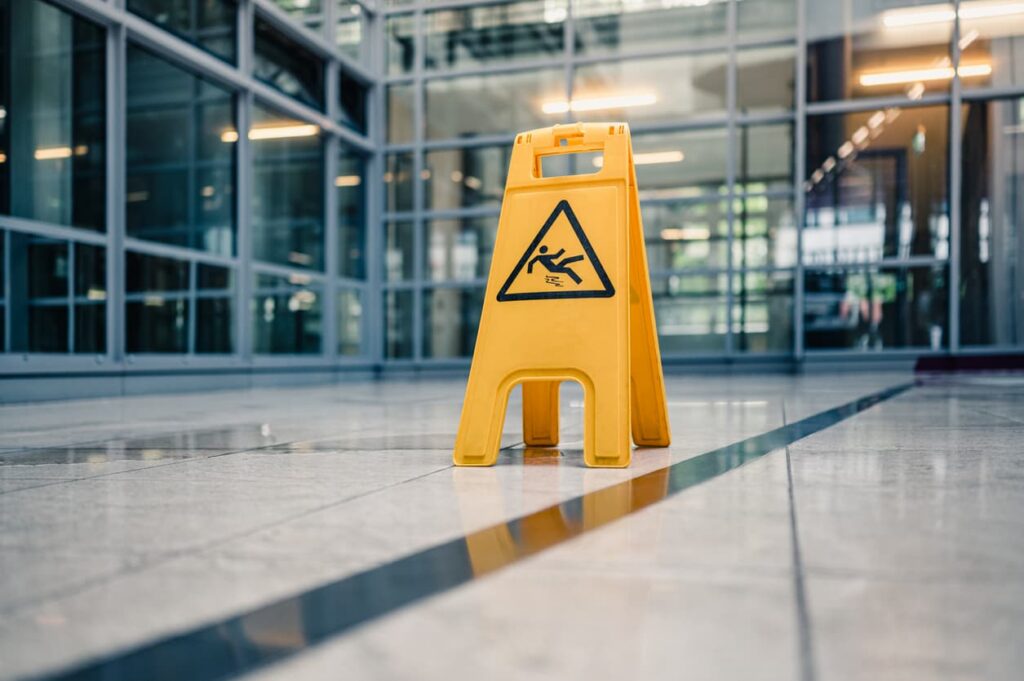
Liability is the legal determination that makes one party (and their insurance carrier) pay for another's damages. It's not the same as blame or fault.
To prove liability in most personal injury cases, you must establish four elements: the other party had a legal obligation to act reasonably (e.g., drivers must follow traffic laws, property owners must maintain safe premises); they failed to meet that standard (e.g., speeding, texting, ignoring a hazard); their failure directly caused your injury, and; you suffered actual financial or physical loss
If any of those four elements—also known as the Four Pillars of Negligence—are missing, your claim can’t move forward.
In the Kansas City area, one factor changes everything: which side of the state line the accident occurred. Missouri's pure comparative fault system lets you recover damages even if you were mostly at fault. However, Kansas's modified comparative negligence rule bars recovery entirely if you're found 50% or more responsible. That single distinction can mean the difference between compensation and nothing.
If you have questions about a recent accident in Kansas or Missouri, call Popham Injury Law. We'll analyze the facts of your incident and explain how local liability laws apply to your potential recovery.
Key Takeaways for Understanding Liability
- Liability is a legal determination, not just who is at fault. This distinction is crucial because it is what legally obligates an insurance company to pay for damages.
- Your location in the Kansas City area dramatically changes your rights. Missouri's pure comparative fault allows recovery even if you are mostly at fault, while Kansas's modified comparative negligence bars recovery if you are 50% or more at fault.
- Proving liability requires specific evidence for the four elements of negligence. You must establish a duty of care, a breach of that duty, that the breach caused the injury, and that you suffered actual damages.
The Core Definition: Legal Liability vs. Moral Fault
Is Having the Blame the Same as Being Liable?
Many people confuse moral blame ("I feel bad this happened") with legal liability ("I am financially obligated to pay"). The law distinguishes between the two.
Legal liability is the court-enforceable obligation to compensate a victim for losses. It typically stems from a specific theory, most frequently negligence. However, you could cause an accident without being liable. For instance, if a driver suffers a sudden, unforeseen medical emergency (like a heart attack) and crashes, they may not be legally liable because they did not act negligently.
Conversely, you could be liable without being the one who physically caused the injury. This is known as vicarious liability. Employers, for example, are responsible for the actions of their employees while on the clock. If a delivery driver runs a red light, the company is typically the liable party, even though the CEO was miles away.
The Four Pillars of Negligence
How Courts Measure Responsibility
In most personal injury and auto accident cases, liability relies on proving negligence.
To prove negligence, there are four legal pillars that we must establish:
- Duty of Care: The obligation to act reasonably. A driver has a duty to follow traffic laws; a store owner has a duty to keep floors dry.
- Breach: The failure to meet that standard. This is the pivot point of the case. Speeding, texting, or ignoring a spill constitutes a breach.
- Causation: Linking the breach directly to the injury. We must prove proximate cause, which means that the injury would not have happened but for that specific breach.
- Damages: Actual financial or physical loss. Without damages, there is no liability claim, even if the other person was reckless.
Why The Four Pillars Matter to You
If any one of these elements are missing, your case generally doesn’t go anywhere. Insurance adjusters are trained to attack the weakest link, frequently arguing that the breach didn't cause the specific injury claimed. They might admit their driver ran the light (Breach) but argue your back pain is from an old sports injury (attacking Causation).
Documenting the breach and causation immediately after an incident is the most effective way to protect your claim. Evidence fades, so gathering it quickly strengthens the foundation of your case.
The Kansas City Split: How Location Changes Liability
Why the State Line Matters
Because Popham Injury Law operates in a border city, the difference between Missouri and Kansas fault systems will be relevant for your claim. The rules change the moment you cross the state line.
Missouri: Pure Comparative Fault
In Missouri, the law follows a pure comparative fault system. This means a plaintiff might be 99% at fault for an accident and still recover 1% of their damages. This system ensures that even if you made a mistake, you are not barred from justice entirely.
Kansas: Modified Comparative Negligence
Kansas operates under modified comparative negligence, specifically the 51% Bar. In Kansas, if a plaintiff is found to be 50% or more at fault, they recover nothing.
This makes the liability investigation in Kansas much higher stakes. If an insurance adjuster can shift just enough blame onto you to hit that 50% mark, their financial liability drops to zero. Fighting these percentage points is the defining battle of a Kansas injury case.
Statute of Limitations Nuance
The deadline to file a lawsuit also diverges. Kansas generally allows 2 years for personal injury claims.
Missouri has traditionally allowed 5 years. However, recent legislative proposals, such as House Bill 68), aim to shorten this to 2 years for injuries occurring after August 2025. This legislative pressure underscores the need to determine liability quickly, regardless of which side of the state line the incident occurred.
Strict Liability: When Negligence Doesn't Matter
Proving negligence is difficult because you have to prove the other party should have known better. But what if you can't prove what they knew?
In specific dangerous situations, the law removes the requirement to prove a breach of duty. If the injury happened, the owner or manufacturer is liable, period. This is called strict liability.
Product Liability
Under Kansas Statute 60-3302 and Missouri common law, manufacturers are liable for defective products regardless of how careful they were during production. If a brake line snaps due to a manufacturing defect, you do not need to prove the factory manager was negligent; the defect itself creates liability.
Dog Bites and Hazardous Activities
Strict liability commonly applies to dog owners. In many jurisdictions, the victim does not need to prove the owner knew the dog was aggressive (unlike the old one-bite rule). If the dog bites, the owner pays. Similarly, abnormally dangerous activities like blasting explosives or storing hazardous chemicals carry strict liability. The risk is so high that the law makes the operator responsible for any fallout, regardless of safety precautions.
How Insurance Adjusters Determine Liability
The Investigation Process
Adjusters use claims software and standardized formulas to assess liability. They input data points, like police report codes, damage photos, and witness statements, and the system suggests a fault percentage. This process is objective but based entirely on available information.
If the adjuster only has their client’s statement, the software input is biased toward their client. Our role is to supply objective data (e.g., black box data, independent witness testimony) that corrects the inputs. This leads to a liability determination that reflects reality rather than a one-sided story.
Real-Time Verification
Kansas is modernizing this process with the Kansas Real Time Motor Vehicle Insurance Verification Act (Senate Bill 42). This system allows for instant electronic verification of a driver’s insurance status, reducing the limbo period where victims don't know if a valid policy exists. This transparency forces liability discussions to happen faster.
Common Defenses: How Liability is Contested
Assumption of Risk
This argument claims the injured party knew the danger and participated anyway. It is common in sports or recreational injury cases. The defense argues that by stepping onto the field or entering the property, you accepted the potential for injury, effectively waiving their assumption of risk.
Constructive Notice
In premises liability cases (like a slip and fall), the defense frequently argues the owner didn't know about the spill. We counter by proving constructive notice—that the hazard existed long enough that they should have known. To do this, we use security footage timestamps or witness testimony to establish that the danger was not sudden, but neglected.
Sudden Emergency Doctrine
This defense argues that a driver lost control due to an unforeseeable event, such as a heart attack or a deer jumping into the road, negating negligence. Proving liability here involves demonstrating that the emergency was actually a predictable result of distraction or poor maintenance, and therefore not a sudden emergency.
The Empty Chair Defense
Defendants commonly attempt to shift liability to a third party who isn't part of the lawsuit, which is called the empty chair defense. A truck driver might blame the maintenance contractor; a manufacturer might blame the shipping company. We ensure all potentially liable parties are identified early so there is no so-called empty chair to point at.
FAQ for Liability and Fault
Can I be found liable if my car was stolen and the thief caused an accident?
Generally, no. Liability usually requires permission (permissive use). If you can prove the vehicle was taken without your consent, you are typically not liable for the thief's actions. However, if you left the keys in the ignition with the engine running (an act of negligence), some jurisdictions might argue you contributed to the theft and the subsequent danger.
Does an apology at the scene count as admitting legal liability?
It depends on the context, but in many cases, yes. While some states have apology laws that protect expressions of sympathy, specific admissions of fact ("I didn't see you," "My brakes failed") are admissible evidence. Always check on the well-being of others without discussing the mechanics of the accident.
What happens if the liable party has no insurance?
If the liable party is uninsured, your own policy's Uninsured Motorist (UM) coverage becomes the primary source of compensation. In this scenario, your insurance company steps into the shoes of the at-fault driver. You still must prove the other driver was liable to access these funds.
If I slipped on ice in a parking lot, is the business owner automatically liable?
No. Both Missouri and Kansas apply the natural accumulation rule to varying degrees. Business owners generally aren't liable for natural snowfall while it is falling. However, if they create an unnatural hazard, such as a gutter draining onto a sidewalk that freezes into black ice, liability attaches because they created a new danger.
How does liability work if I was injured in an Uber or Lyft?
Rideshare liability is tiered. If the app is off, the driver's personal insurance is liable. If the app is on and they are waiting for a ride, a limited commercial policy applies. If they have a passenger (or are en route to pick one up), a high-limit commercial policy ($1 million+) is in effect. Determining the status of the app at the moment of impact is the key to identifying the liable insurer.
We’ll Handle the Liability Question. You Focus on Getting Better.
Whether you are dealing with a clear-cut case of negligence or a difficult multi-party dispute involving strict liability, the outcome depends on the quality of the investigation performed immediately after the incident.
Call Popham Injury Law today to speak with an experienced Kansas City personal injury lawyer. We will help you determine if the facts of your case support a liability claim and what steps are necessary to preserve the evidence required to prove it.